Basic Information
| Detail | Information |
|---|---|
| Full name | Sunchita Feliciano Tyson |
| Also known as | Toni Tyson, Sunchita Maria Tyson |
| Known for | Mother of Neil deGrasse Tyson, wife of Cyril deGrasse Tyson |
| Profession | Gerontologist |
| Workplace | U.S. Department of Health, Education and Welfare |
| Spouse | Cyril deGrasse Tyson |
| Children | Neil deGrasse Tyson, Stephen Joseph Tyson, Lynn Antipas Tyson |
| Grandchildren | Lauryn Vosburgh, Stephen Tyson Jr., Rachel Tyson, Miranda Tyson, Travis Tyson, Ricardo Vosburgh-Tyson |
| Public profile | Private, family centered, historically under documented |
A Woman at the Center of a Family Story
When I look at the life of Sunchita Feliciano Tyson, I do not see a loud public figure or a celebrity who chased attention. I see something more enduring. I see a woman who helped shape a family that became widely known, while she herself remained mostly in the background, like the steady beam of a lighthouse that others navigate by.
Her name appears most often in connection with Neil deGrasse Tyson, one of the most recognizable science communicators in the world. But reducing her to only that role would flatten her life. She was a wife, a mother, a working professional, and a person whose influence seems to have moved through generations like water through stone. Her story is one of presence, discipline, education, and care.
Early Life and Identity
There is not a deep public record of Sunchita Feliciano Tyson’s early years, and that absence itself says something. Her life belongs partly to family memory rather than to headlines. What is generally repeated is that she was born in 1928. Some accounts place her origins in Puerto Rico, and others connect her to New York, so the exact details remain less settled than the outline of her later life.
What stands out most is her identity as a Puerto Rican woman who lived in the United States and built a professional and family life that crossed cultures. That kind of life often asks for quiet strength. It asks a person to move between worlds, to raise children while working, to keep a household grounded, and to carry ambitions that may never be fully recorded in public archives.
I think of her as someone who lived with both roots and reach. The roots were family, culture, and home. The reach was education, work, and the long shadow of influence cast by her children and grandchildren.
Career and Professional Work
Sunchita Feliciano Tyson worked as a gerontologist for the U.S. Department of Health, Education and Welfare. That detail matters because it tells me she was not only a family matriarch, but also a professional devoted to aging, health, and human dignity. Gerontology is a field that deals with the realities of later life, and that gives her story a certain resonance. She spent part of her career studying the needs of older people, while also raising her own family through the demanding middle years of life.
A recurring part of her story is that she returned to school after having children and earned advanced training in gerontology. That kind of return to education is not a small thing. It means she did not stop growing when family life became busy. She kept going. She carried books and responsibilities together. That is a kind of courage that often goes uncelebrated.
I see her professional life as a bridge between the intimate and the public. At home, she was helping build a family. At work, she was helping shape how society understood aging. Both roles required patience, attention, and a belief that people matter at every stage of life.
Marriage to Cyril deGrasse Tyson
She married sociologist, professor, and civil rights activist Cyril deGrasse Tyson. The length of their 64-year marriage is exceptional in any period. Such a long marriage is not a statistic. Its climate is built on common aims, compromise, duty, and tenacity.
They were the Tyson family center. Cyril promoted civic engagement and intellectual life. Sunchita’s professional discipline and domestic emotions were brought. Partnership is often the secret to success in families like theirs.
I believe their marriage fostered ideation. That matters. Children reared in families with books, service, and conversation grow to study the world rather than fear it.
Children and Family Legacy
Sunchita and Cyril had three children, and each one carried the family story in a different direction.
Neil deGrasse Tyson became the most publicly known. He is an astrophysicist, author, television personality, and science advocate. He has often spoken about his family environment as an important part of his development. From that, I read Sunchita’s influence not as a single dramatic act, but as a steady pattern of encouragement, expectation, and exposure to learning.
Stephen Joseph Tyson is another child named in the family record. He is identified as an artist, and other public descriptions connect him with creative and civic work. That suggests a family culture that made room not only for science, but also for expression.
Lynn Antipas Tyson, the third child, is described as a business executive. That adds yet another dimension to the household. One family, three children, three paths, all different, all shaped by the same early environment. That kind of range often reflects parents who value competence, education, and self-definition more than simple imitation.
The grandchildren extend that legacy further. Lauryn Vosburgh, Stephen Tyson Jr., Rachel Tyson, Miranda Tyson, Travis Tyson, and Ricardo Vosburgh-Tyson are all part of the larger family tree. Among them, Stephen Tyson Jr. has a public profile of his own, while Miranda and Travis are most frequently recognized because of their connection to Neil deGrasse Tyson. What matters to me is not just the names, but the continuity. A family line is not a straight road. It is more like a branching river delta, carrying memory into new places.
Influence on Neil deGrasse Tyson
When people speak about Neil deGrasse Tyson, they often focus on his command of science or his talent for communication. But behind that public figure is a mother who seems to have nurtured intellectual curiosity early and consistently. Sunchita’s role in his life appears to have been one of disciplined support rather than spectacle.
I find that especially compelling. It is easy to admire the visible star, harder to appreciate the force that helped set the orbit. Sunchita likely helped create a home where observation, learning, and self-possession were ordinary habits. That kind of upbringing can shape a child for decades.
Neil’s fame has brought renewed attention to his parents, but Sunchita’s importance does not depend on that fame. She matters because she helped build the conditions in which a family could thrive and diversify. Her influence appears in the children, the grandchildren, and the larger story of a household that valued knowledge and resilience.
Public Memory and Later Mentions
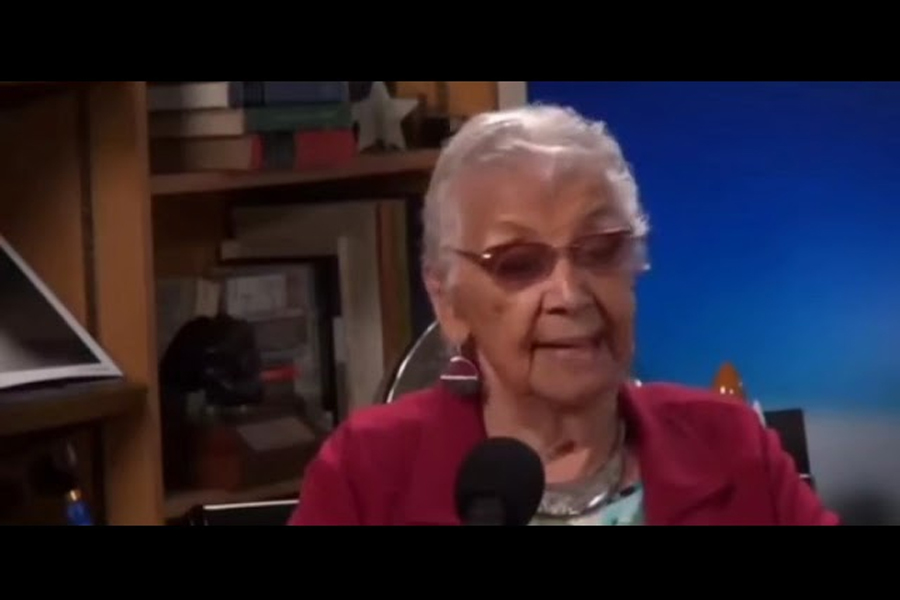
Through interviews and family features related to Neil, Sunchita Feliciano Tyson gained national attention. People characterized her as friendly, insightful, and grounded. Later family reminiscence and social media mentions include her.
I like that public memory because it illustrates how reflection clarifies certain lives. She was not branded. She wasn’t seeking attention. People return to her story because it depicts quiet influence, which is unique.
Her life offers an alternative to a noisy culture. She was not thunderclap. Weather her. Growth was possible under her stability.
Family Members
Cyril deGrasse Tyson
Cyril was Sunchita’s husband and the father of their children. He worked as a sociologist and educator, and he was active in civil rights. His life and hers were intertwined for more than six decades. Together they formed the foundation of the Tyson family.
Neil deGrasse Tyson
Neil is Sunchita’s son and the most widely known member of the family. He became an astrophysicist and public intellectual whose name is familiar far beyond academia. His career brought the Tyson family into global view.
Stephen Joseph Tyson
Stephen is one of Sunchita’s children and is associated with creative and artistic work. His path shows that the family legacy was not limited to science alone.
Lynn Antipas Tyson
Lynn is Sunchita’s daughter and is described as a business executive. Her career adds another layer to the family’s range of accomplishment.
Grandchildren
The grandchildren linked to Sunchita include Lauryn Vosburgh, Stephen Tyson Jr., Rachel Tyson, Miranda Tyson, Travis Tyson, and Ricardo Vosburgh-Tyson. Among them, Stephen Tyson Jr. has the most visible independent public profile, while Miranda and Travis are often mentioned in connection with Neil.
FAQ
Who was Sunchita Feliciano Tyson?
Sunchita Feliciano Tyson was a gerontologist, a wife, and a mother whose best known role in public life is being Neil deGrasse Tyson’s mother. She was also married to Cyril deGrasse Tyson and helped raise a family with strong educational and professional traditions.
What did Sunchita Feliciano Tyson do for work?
She worked as a gerontologist for the U.S. Department of Health, Education and Welfare. Her career focused on aging and the care of older adults, which gives her work a serious and humane dimension.
Who was her husband?
Her husband was Cyril deGrasse Tyson. He was a sociologist, educator, and civil rights activist, and the marriage lasted 64 years.
How many children did she have?
She had three children: Neil deGrasse Tyson, Stephen Joseph Tyson, and Lynn Antipas Tyson.
Did Sunchita Feliciano Tyson have grandchildren?
Yes. The named grandchildren include Lauryn Vosburgh, Stephen Tyson Jr., Rachel Tyson, Miranda Tyson, Travis Tyson, and Ricardo Vosburgh-Tyson.
Why is she remembered today?
She is remembered because she played a foundational role in a family that produced notable public figures, especially Neil deGrasse Tyson. Just as important, she represents the kind of parent whose influence is powerful even when it is not loudly displayed.